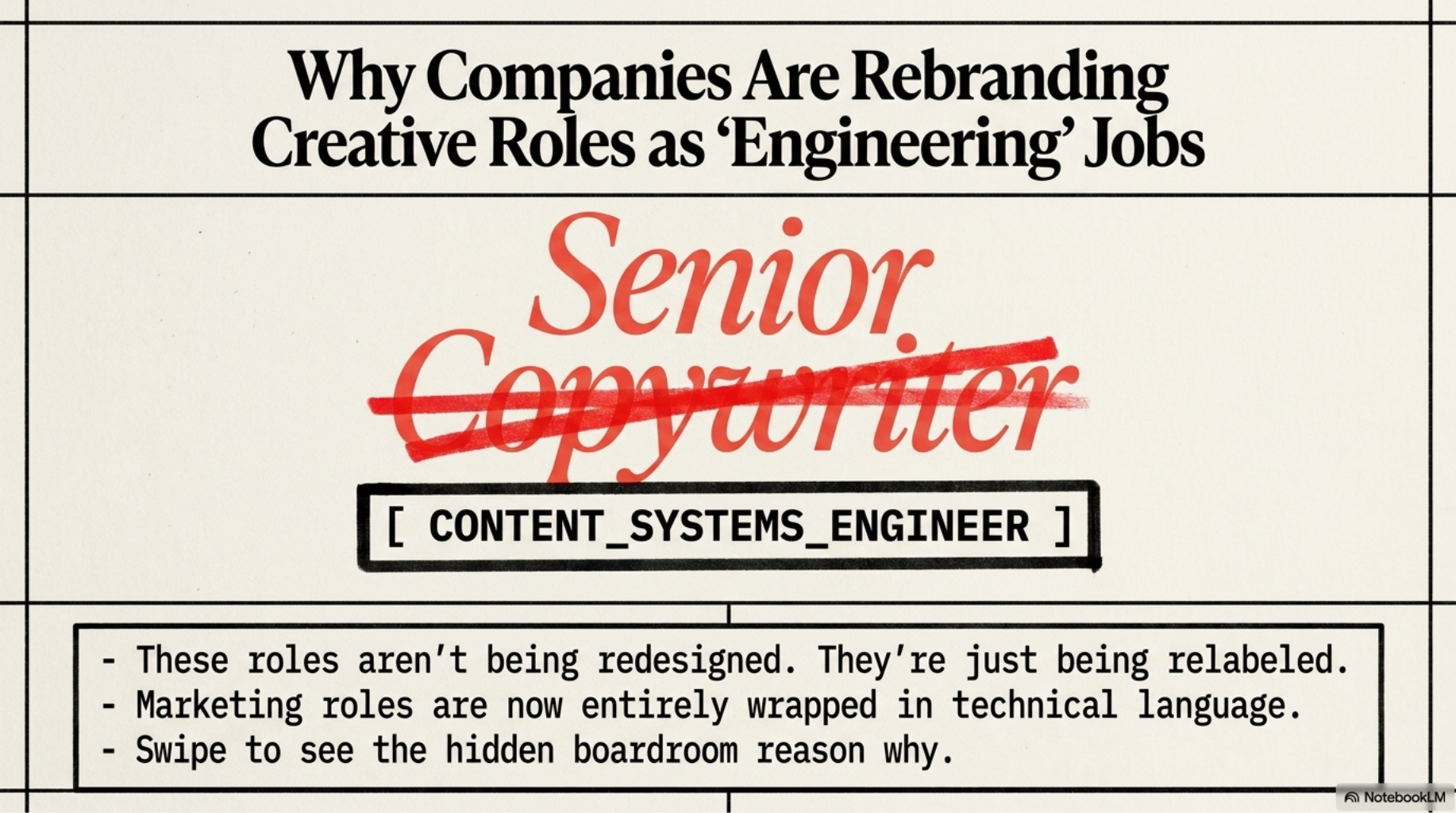
Scroll through job listings right now and you’ll notice something subtle but consistent: creative roles are being relabeled.
Not redesigned. Relabeled.
Titles that used to live under marketing, content, and brand now show up wrapped in technical language. Words like “systems,” “intelligence,” and increasingly, “engineer.”
At first glance, it feels like progress. A reflection of how digital and data-driven marketing has become.
But the timing of this shift matters.
Creative Roles Were Hit First and Hard
Over the past few years, layoffs have reshaped how companies think about headcount.
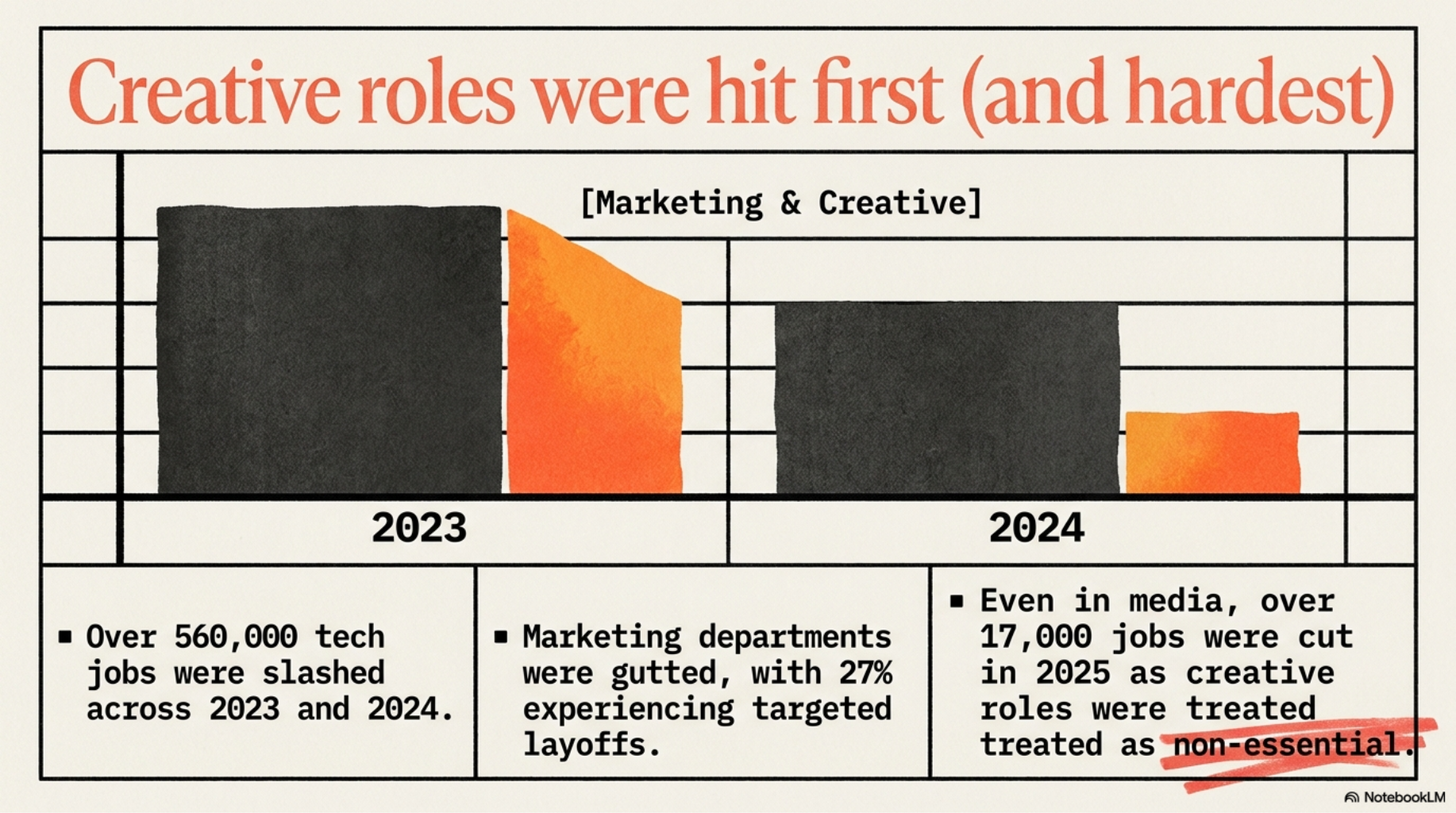
In 2023 alone, more than 260,000 tech employees were laid off, a 59% jump from the year before.
By 2024, over 300,000 additional layoffs were recorded through WARN filings across industries.
And those cuts weren’t evenly distributed.
Marketing and creative functions were consistently among the most affected. One survey found that 27% of marketing departments experienced layoffs, with roles tied to campaigns and content among the first to go.
Large companies followed the same pattern. Amazon, Google, and others cut hundreds of roles across marketing, advertising, and brand teams as part of broader restructuring.
Even in adjacent industries like media and entertainment, where creativity is core to the product, more than 17,000 jobs were cut in 2025, with companies citing cost pressure and AI adoption as key drivers.
The pattern is hard to ignore. When companies needed to reduce costs, creative and marketing roles were often treated as flexible or non-essential.
But the Work Never Disappeared
Here’s the contradiction.
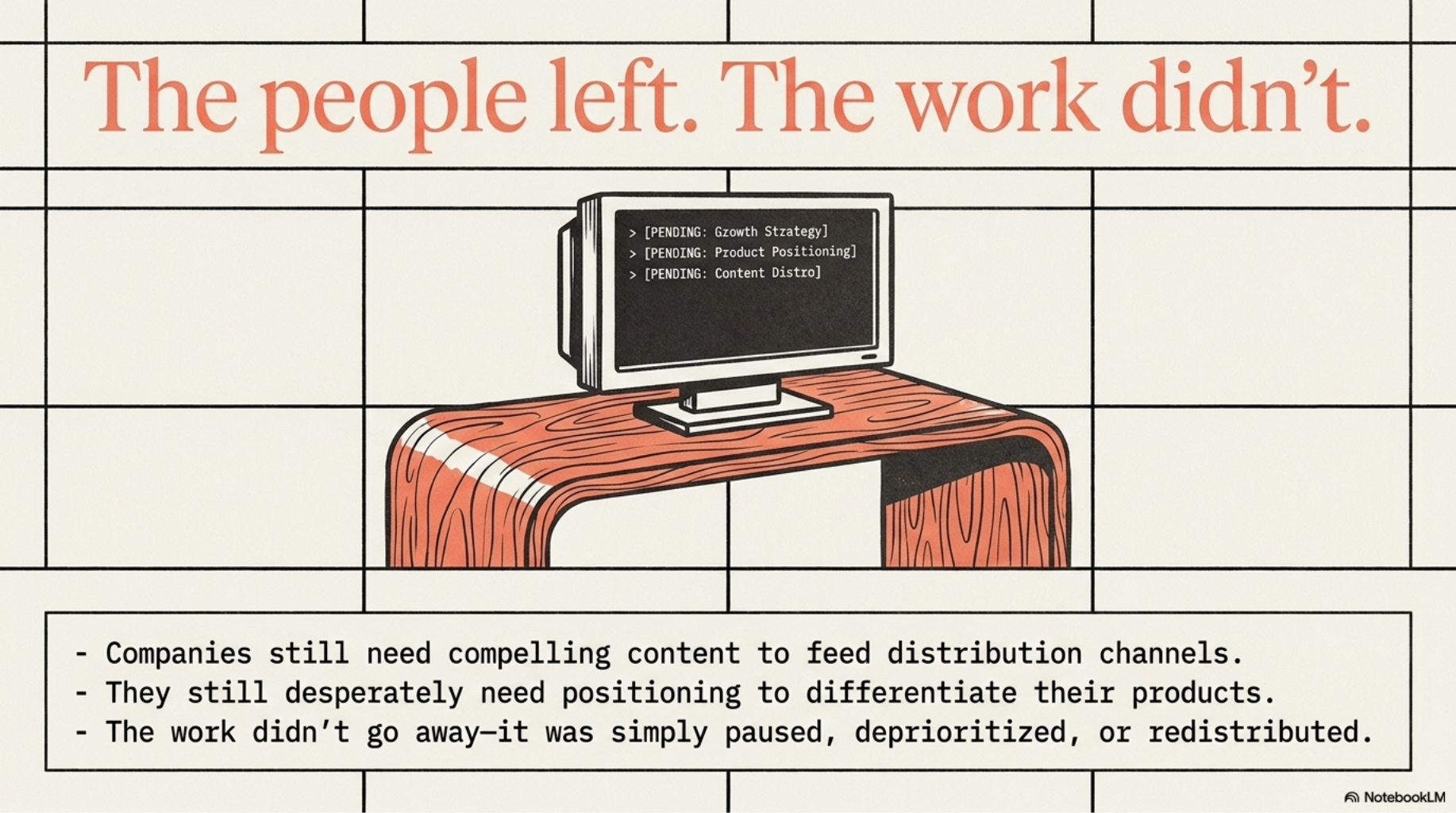
After the layoffs, companies still needed the same outcomes.
They still needed content to feed distribution channels.
They still needed positioning to differentiate products.
They still needed strategy to drive growth.
That work didn’t go away. It got redistributed, deprioritized, or temporarily paused.
And now it’s coming back.
So Why the New Titles?
Because perception drives budget.
In many executive environments, technical roles are easier to justify. They are associated with infrastructure, scalability, and long-term value.
Creative roles, despite their impact, are often framed as subjective or replaceable.
So instead of re-arguing the value of creative work, companies are reframing it in a language that already signals importance.
“Engineer” implies systems.
“Intelligence” implies data.
“Operations” implies efficiency.
All of those read differently in a boardroom than “content” or “brand.”
This Isn’t Just Semantics. It’s Strategy.
Titles act as signals inside an organization.
They influence how roles are funded, how teams are structured, and how work is prioritized.
After a wave of layoffs where creative teams were labeled expendable, companies face a credibility gap. They need the same capabilities back, but they also need to justify why those roles are now essential.
Renaming becomes a workaround.
It allows companies to reintroduce similar work under a different framing, one that aligns with current priorities like AI, automation, and systems thinking.
The AI Factor Accelerates the Shift
There’s another pressure shaping this language shift: automation.
AI is already being used to handle parts of content creation, marketing operations, and production workflows. In some estimates, tens of thousands of job cuts across industries have been tied directly to automation and AI adoption.
That changes how creative work is perceived.
If execution can be automated, then the remaining value shifts toward strategy, systems, and oversight. Companies respond by emphasizing those aspects in the role itself.
Not because creativity is gone, but because it needs to be framed as something more than output.
The Risk of Rebranding Without Rethinking
There is a short-term benefit to this shift. It makes roles easier to justify. It aligns with how leadership evaluates value.
But it also creates a disconnect.
When titles become more technical than the work itself, expectations drift. Teams end up caught between creative output and operational metrics, without clear definitions of success.
More importantly, it avoids the deeper issue.
Creative work has always been tied to business outcomes. It drives demand, pricing power, and customer loyalty. The problem has never been the lack of value.
The problem has been how that value is communicated.
What This Trend Really Signals
This isn’t just about job titles.
It reflects a broader tension inside modern companies.
On one side, there’s a push toward efficiency, systems, and measurable output.
On the other, there’s the need for originality, differentiation, and human insight.
Right now, systems are winning the language battle.
So creative work is being repackaged to fit that framework.
Not because it changed. Because the way companies define “essential” still hasn’t caught up.
