Most people still think TikTok Shop is influencers dancing around with discount codes.
Meanwhile, brands are quietly generating more revenue during a single livestream than some ecommerce stores generate in a month.
That was the focus of my recent conversation with TikTok Live strategist Jason Termechi.
Jason spent years helping brands scale on TikTok's live shopping platform, first as a Live Account Manager at TikTok and now as a consultant helping brands build livestreaming systems that drive sales.
During our conversation, he broke down the strategy behind a TikTok Mega Live that generated more than $180,000 in revenue.
What surprised me wasn't the revenue.
It was how simple the setup was.
The $180,000 Livestream Wasn't Built in a Studio
When people hear numbers like $180,000, they immediately imagine expensive cameras, massive production crews, and sophisticated technology.
That wasn't the case.
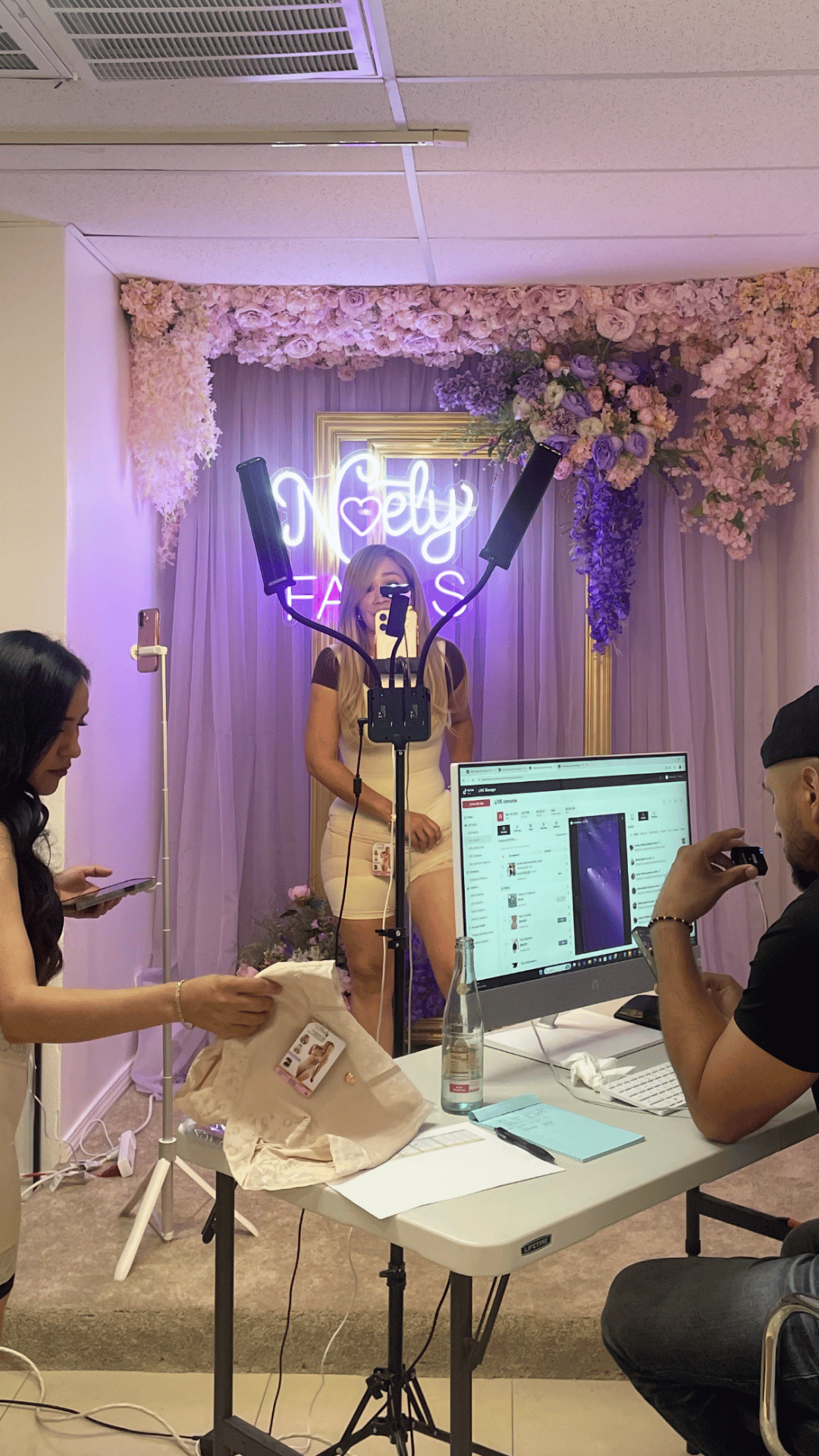
The livestream Jason referenced belonged to Noely Fajas, a women's apparel brand that has become one of the biggest success stories on TikTok Live.
According to Jason, the setup was remarkably simple.
“They did it with a phone and a tripod and a little bit of lighting.”
No multi-camera production.
No elaborate control room.
No expensive studio.
Just a founder who deeply understood her customers and a strategy built around engagement.
That theme came up repeatedly throughout our conversation.
The technology wasn't the differentiator.
The experience was.
Why Live Shopping Is Different From Traditional Ecommerce
One of the biggest misconceptions about live shopping is that it's simply another sales channel.
Jason sees it differently.
He described TikTok Live as a way for brands to create direct relationships with customers in real time.
Short-form content builds awareness.
Livestreams build trust.
“It’s given brands a platform to connect with their fans and followers and potential customers in a way that you don’t really get from short-form video.”
That distinction matters.
A product page can't answer questions.
A livestream can.
A product page can't demonstrate a product on multiple body types.
A livestream can.
A product page can't react to customer concerns in real time.
A livestream can.
The brands winning on TikTok Live are taking advantage of those differences.
The Algorithm Doesn't Care How Many Followers You Have
One of the most interesting parts of the conversation was hearing Jason explain how TikTok evaluates livestream performance.
Many brands assume they need a large audience before investing in live shopping.
Jason disagrees.
“The algorithm doesn’t necessarily reward your following. It rewards whether you’re able to convert in a fast fashion.”
In other words, TikTok rewards performance.
If viewers stay longer, engage more often, click products, and purchase, TikTok sends additional traffic.
That's why smaller brands can sometimes outperform larger competitors.
The algorithm is constantly comparing livestreams against one another.
Who's generating engagement?
Who's driving sales?
Who's keeping viewers watching?
Those signals matter far more than follower count alone.
What is a TikTok Mega Live?
The phrase "Mega Live" gets thrown around frequently, but Jason offered a much more practical definition.
A Mega Live isn't simply a longer livestream.
It's an event.
The best Mega Lives typically include:
Exclusive product launches
Limited-time bundles
Flash sales
Guest appearances
Giveaways
Aggressive promotion leading up to the event
Extended broadcast windows
Think of it as Black Friday compressed into a single livestream experience.
As Jason explained:
“The mega live is the event of either the quarter or the month that you really rely on that’s gonna bring the majority of your GMV throughout the month.”
That shift in thinking is important.
Most brands treat livestreams like content.
The highest-performing brands treat them like product launches.
The Most Valuable Insight Had Nothing To Do With TikTok
Throughout our conversation, I noticed something interesting about the way Jason thinks.
He doesn't approach livestreams like a marketer.
He approaches them like an operator.
Every recommendation starts with data.
Every decision starts with a metric.
If traffic is low, he examines tap-through rates.
If viewers are clicking products but not buying, he looks for ways to increase urgency.
If average order value is too low, he adjusts product assortment, pricing, or bundles.
Everything starts with diagnosis.
At one point, he explained how he approaches revenue goals.
“I need to hit 100K in 10 hours. That’s 10K an hour. How am I going to get to 10K an hour?”
Most people start with content ideas.
Jason starts with math.
How many products need to sell?
What's the target average order value?
Which products can support that goal?
What promotions need to be layered into the event?
The strategy is built backward from the desired outcome.
That's a completely different way of thinking.
The Promotion Starts Long Before The Livestream
One of the biggest mistakes brands make is waiting until the day of the event to promote it.
Jason recommends starting weeks in advance.
The goal is simple: make sure nobody can miss it.
Schedule the livestream
Create supporting content
Send CRM messages
Email customers
Text your audience
Build anticipation
His advice was refreshingly direct:
“Mega Live’s coming. Mega Live’s coming. Mega Live’s coming.”
By the time the event arrives, your audience should already know when it starts.
The most successful Mega Lives don't rely on luck.
They rely on preparation.
Why Authenticity Continues To Outperform Production
As someone who produces livestreams professionally, I loved this part of the discussion.
Jason repeatedly emphasized that production value is not the reason customers buy.
Trust is.
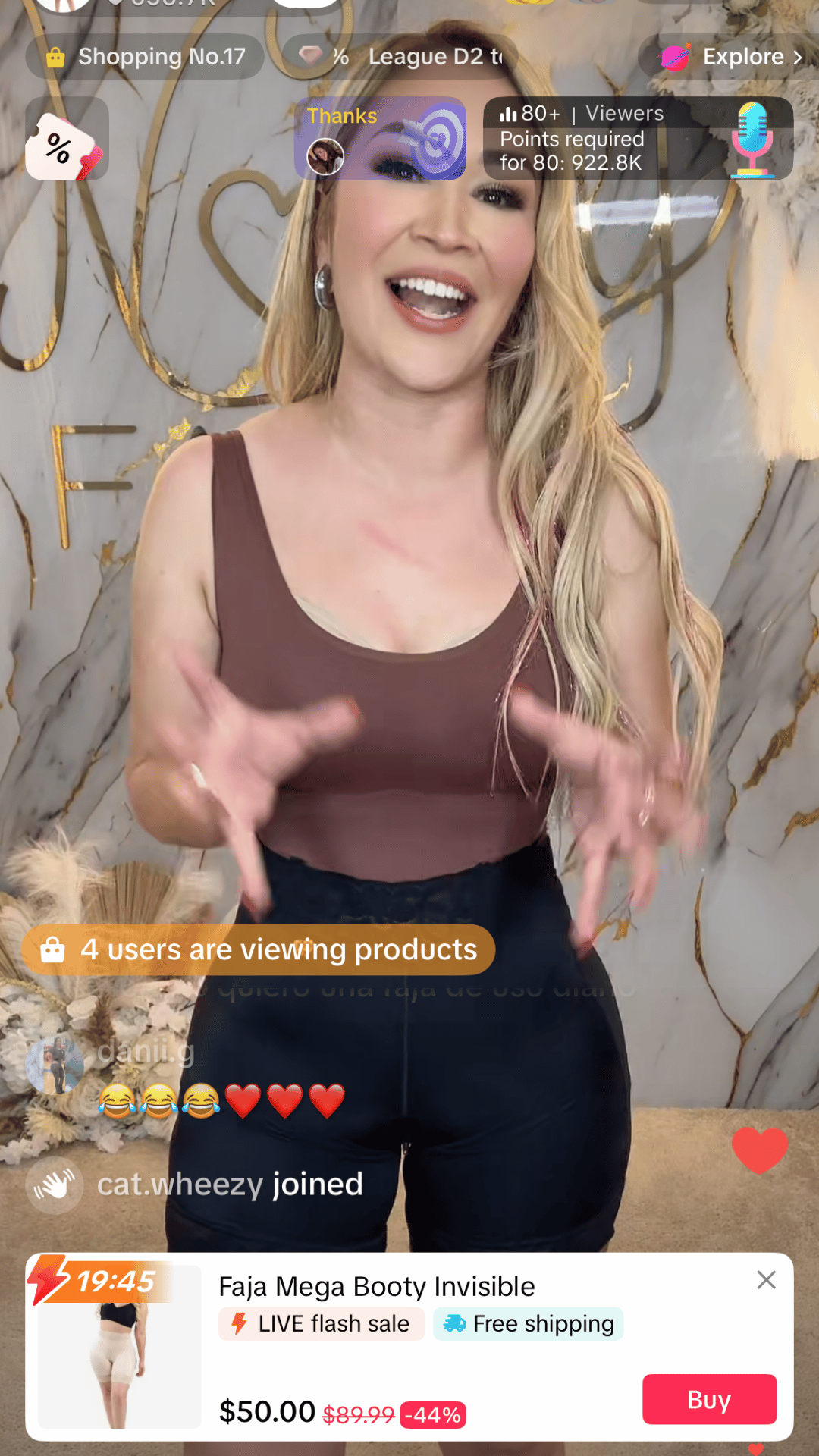
The founder of Noely Fajas wasn't relying on fancy transitions or cinematic camera angles.
She was answering questions.
Trying on products.
Showing different sizes.
Talking directly to customers.
Her livestream felt more like a conversation than a sales pitch.
Jason described her as a unicorn, but there was an important lesson underneath that observation.
People buy from people.
Particularly when they're making impulse purchases.
Particularly when they're seeing products for the first time.
And particularly when they can ask questions in real time.
The Community Effect
One thing I hadn't fully appreciated until this conversation was how community-driven successful TikTok Lives become.
Customers don't just show up to buy.
They show up to participate.
Some become regulars.
Some answer questions for new viewers.
Some proudly share what they've purchased.
Others help create social proof inside the comments.
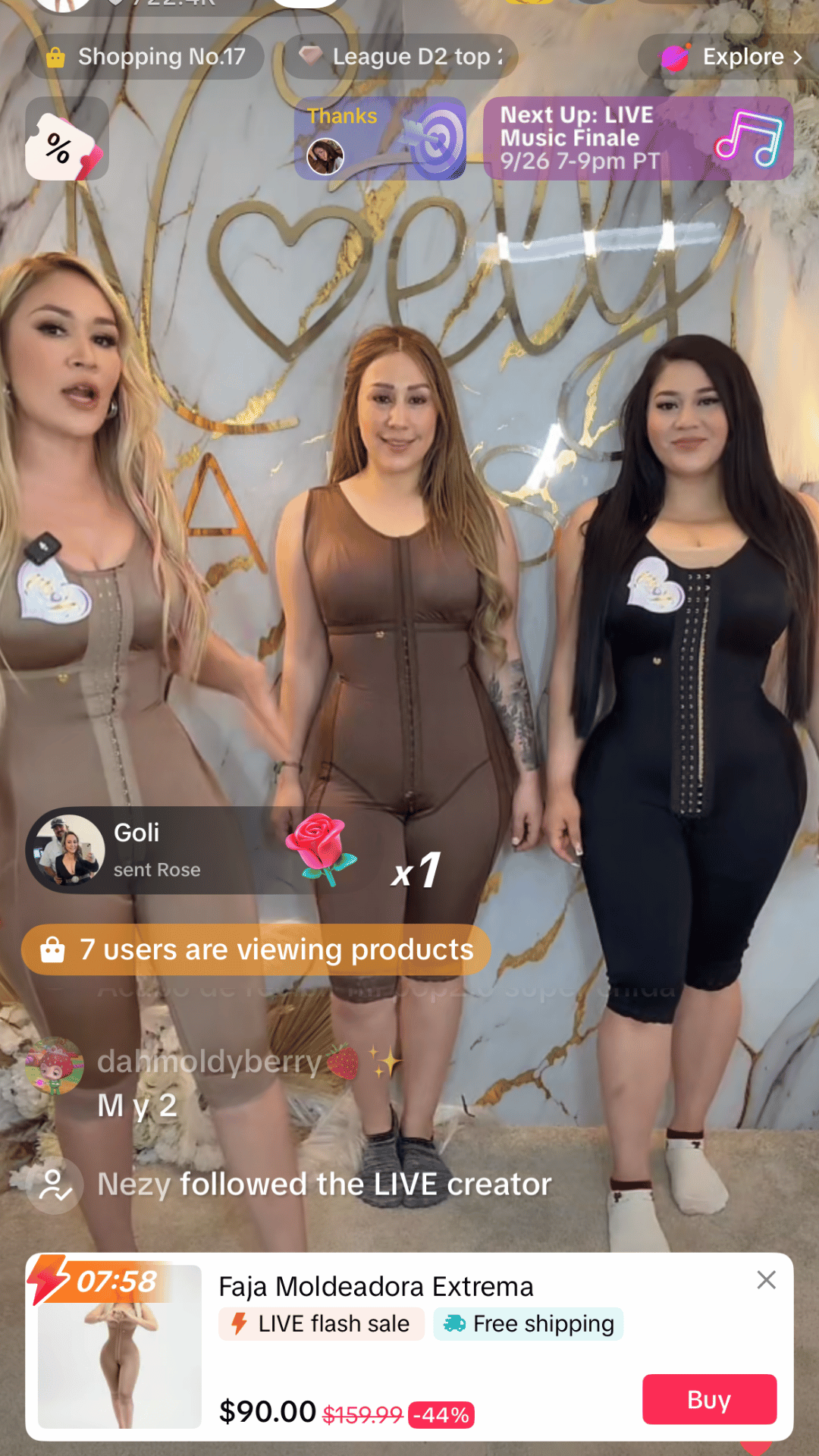
Jason talked about how the team would regularly recognize buyers by name during the livestream.
That simple act made customers feel seen.
It also encouraged more participation.
When people feel like they're part of something, they stay longer.
When they stay longer, they buy more often.
When they buy more often, the algorithm notices.
Everything feeds everything else.
Why TikTok Flash Sales Work So Well
One of the most fascinating parts of the discussion was hearing Jason break down urgency.
Flash sales aren't simply discounts.
They're decision-making tools.
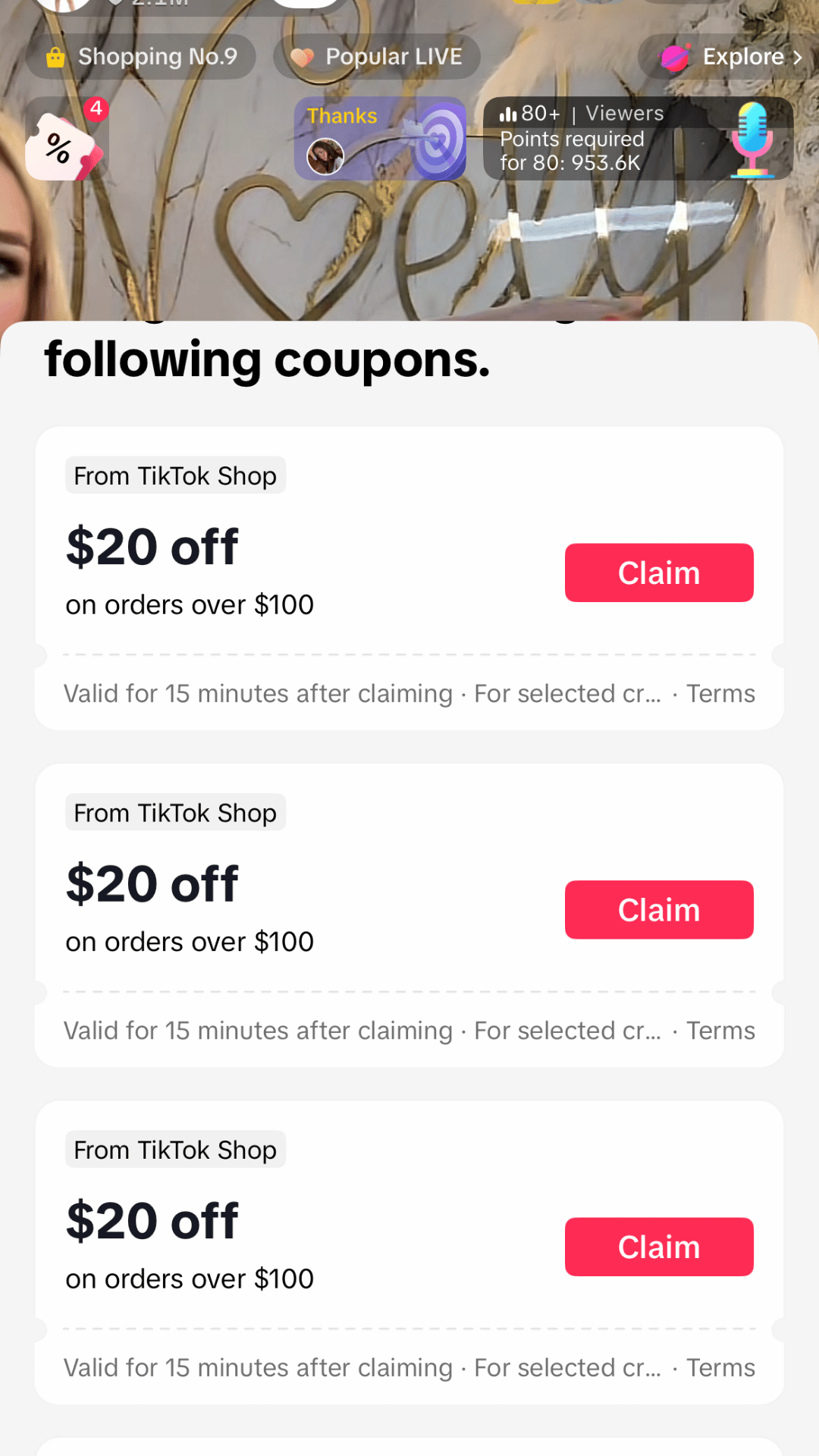
A product might normally sell for $150.
A flash sale might bring it down to $100.
A coupon might lower it even further.
Free shipping adds another layer.
Now the customer sees a limited-time opportunity that may disappear in minutes.
Jason explained that some hosts make the mistake of moving too quickly between products.
Instead, they should allow the countdown timer to do its job.
Let the clock create tension.
Let customers feel the decision.
The goal isn't pressure.
The goal is clarity.
Customers know exactly how much time they have left.
What Brands Should Do Before Going Live on TikTok
One of my favorite parts of the conversation came when Jason described how he evaluates potential clients.
He doesn't start by asking how many followers they have.
He asks different questions.
Are they consistently creating content?
Do they have products people actually want?
Do they have someone capable of hosting?
Are they willing to commit to a long-term strategy?
Do they understand that livestreaming is a skill that improves over time?
Only after those questions are answered does he begin building a playbook.
That mindset stood out to me because it reflects something I've seen repeatedly in livestreaming.
The brands that win aren't necessarily the biggest brands.
They're the brands willing to learn.
Final Thoughts
The biggest takeaway from my conversation with Jason wasn't that a TikTok Mega Live generated $180,000.
The bigger takeaway was how it happened.
The winning formula wasn't expensive equipment.
It wasn't celebrity influencers.
It wasn't complicated technology.
It was a combination of preparation, consistency, community, strong offers, and a deep understanding of customer behavior.
As live shopping continues to evolve, I think more brands are going to realize that livestreaming isn't simply another marketing tactic.
It's becoming its own channel.
And for the brands willing to invest in learning how it works, the opportunity is still enormous.
Frequently Asked Questions About TikTok Mega Lives
What is a TikTok Mega Live?
A TikTok Mega Live is a highly promoted livestream event that combines exclusive products, giveaways, flash sales, guest appearances, and extended streaming hours to generate significant sales volume.
How much revenue can a TikTok Mega Live generate?
Results vary by brand and category, but Jason shared a case study where a single Mega Live generated more than $180,000 in sales.
Do you need a large following to succeed on TikTok Live?
No. TikTok's algorithm rewards engagement, retention, and conversions more than follower count alone.
How long should a TikTok Mega Live last?
Many successful Mega Lives run between 8 and 16 hours, although duration varies depending on the product assortment and goals.
What products perform best during TikTok Live shopping events?
Products that benefit from demonstration, education, and real-time interaction tend to perform especially well. Fashion, beauty, collectibles, home goods, and consumer products are common categories.
How far in advance should brands plan a Mega Live?
Jason recommends planning at least one month ahead. Brands hosting their first Mega Live may benefit from even longer preparation timelines.
Do I need expensive equipment for TikTok Live shopping?
No. Some of the most successful TikTok Live sellers operate with a smartphone, tripod, and basic lighting setup.
Why do flash sales work so well during livestreams?
Flash sales create urgency and give viewers a reason to act immediately rather than delaying a purchase decision.
Should founders host their own TikTok Lives?
When possible, yes. Founders often bring credibility, authenticity, and product expertise that audiences respond to naturally.
Is TikTok Live shopping only for large brands?
No. Smaller brands with engaged communities can compete effectively and sometimes outperform larger competitors by creating better livestream experiences.
