Email marketing didn’t stop working. It just stopped being interesting.
For years, the advice has been predictable.
Write better subject lines.
Send fewer emails.
Test your send time.
Obsess over open rates.
At the same time, inboxes got smarter, audiences got more selective, and open rates quietly became unreliable.
In this episode of Lights, Camera, Live, I sat down with Caleb Dempsey from Ecamm to talk about a different approach. One that treats email as a relationship instead of a broadcast channel. The result is gamified, interactive email experiences that drive real engagement, not vanity metrics.
This isn’t theory.
It’s measurable.
And it’s built with tools most teams can actually afford.
Meet Caleb Dempsey: Lifecycle Marketing Meets Play
Caleb Dempsey is Ecamm’s Lifecycle Marketer, which means he designs the customer journey from signup to long-term engagement. He’s also a comedy writer.
That combination matters.
“Adults desperately need more play in their lives and in their inboxes.”
That belief shapes everything Ecamm does with email. Leaderboards. Interactive challenges. Feedback loops that feel rewarding instead of transactional.
Why Open Rates Matter Less Than Engagement in 2026
One of the first things we unpacked was why traditional email metrics don’t mean what they used to.
“Apple Mail and Gmail now automatically scan emails for safety and phishing. That means many “opens” aren’t real human actions anymore.”
As Caleb put it, “The reason open rates don’t matter as much as they used to is because Apple and Gmail are opening emails for people.”
What still matters is what someone actually does.
Clicks. Responses. Participation. Actions that signal real interest.
That’s why Ecamm shifted their focus away from opens and toward engagement.
Email Is a Relationship, Not a One-Way Announcement
Caleb reframed email in a way that immediately clicks.
“When we stop looking at email as a one-way communication and start inviting people to join in, it transforms the relationship.”
He broke the inbox content into two categories.
Spam disguised as value.
And value that builds a relationship.
Only one of those earns attention.
Gamification works because it turns email into something people participate in, not something they passively consume.
The Tool Behind Ecamm’s Gamified Email Strategy
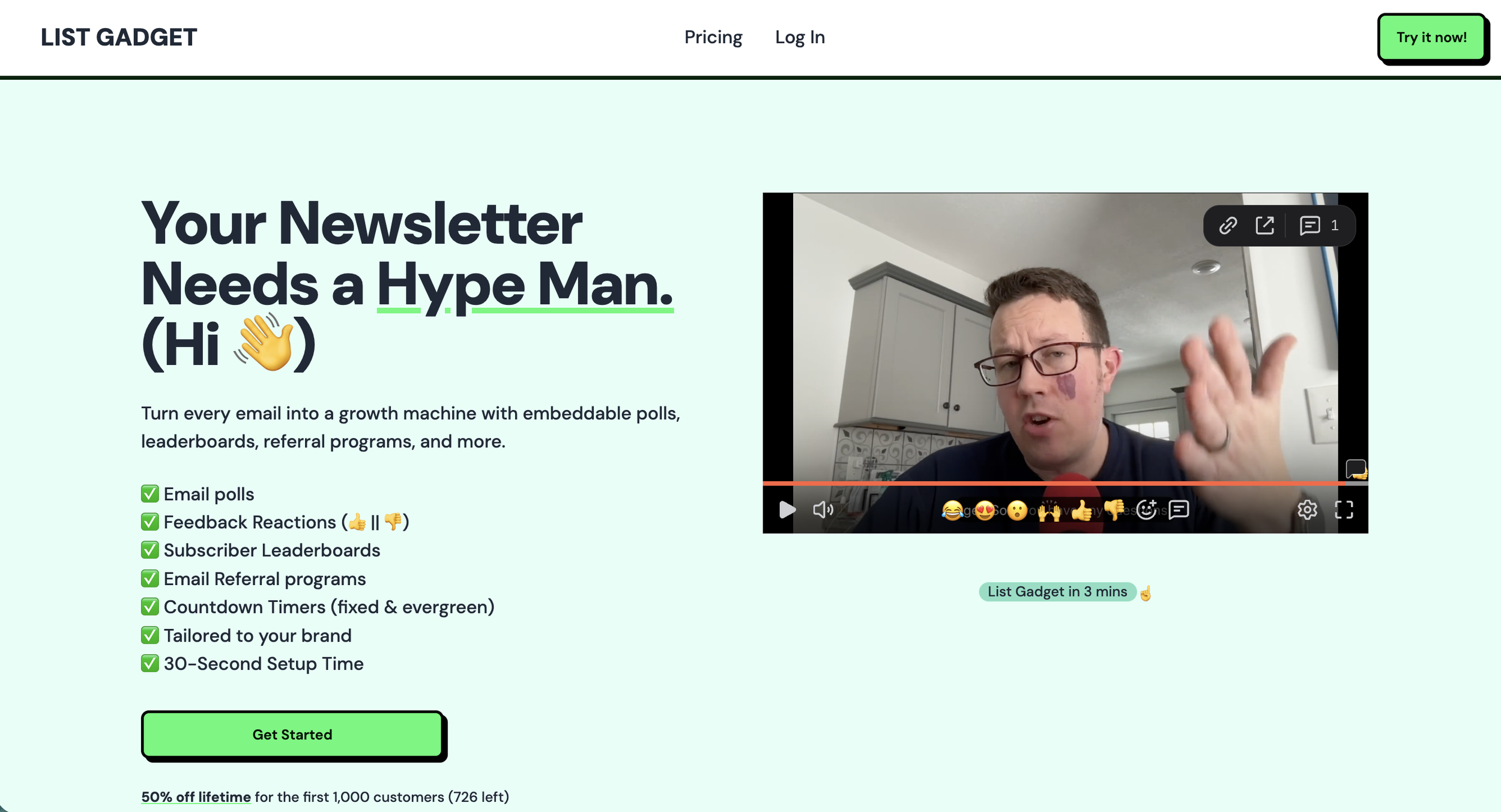
Ecamm uses a tool called List Gadget to add interactive elements directly inside their emails.
List Gadget integrates with common email platforms and allows teams to create:
Leaderboards
Polls and reactions
Idea submissions and voting
Engagement tracking tied to specific actions
The key detail is accessibility. The tool costs $9 USD per month.
As Caleb said on the show, “You’re paying nine dollars. I can’t be mad at it.”
What “Meaningful Actions” Actually Means
Not all clicks are equal. Ecamm doesn’t reward empty interaction.
Meaningful actions move the relationship forward.
Caleb explained it this way: “Every week, we customize the points for what the most valuable action is for us that week.”
Examples include:
Clicking to watch a show or lesson
Completing an assignment
Submitting feedback
Filling out a survey
Participating in a challenge
Low-effort actions might earn fewer points. High-effort actions earn more.
“If I’m asking someone to fill out a survey,” Caleb said, “I give them more points. If I’m asking them to click and watch a YouTube Short, they get fewer points.”
The system rewards effort, not noise.
Case Study: Ecamm’s Email Leaderboards
Ecamm introduced email leaderboards to encourage engagement in their Monday newsletter.
Subscribers earn points for meaningful actions. Each quarter resets the leaderboard. Names are anonymized by default to keep things fun and brand-safe.
The impact was immediate.
“Our click-through rate increased by about 80 percent after six months,” Caleb shared.
They went from an average click rate of around 1.6 percent to consistently above 2.5 percent.
All from adding a single interactive layer.
Rewards That Motivate Without Inflating Budgets
Ecamm doesn’t rely on expensive prizes.
Winners receive discontinued merch, custom items, stickers, or exclusive experiences. Things you can’t just buy online.
Caleb explained the thinking. “Nobody else will be able to get this prize unless they’ve won the leaderboard.”
The reward feels special without being costly.
In some cases, the reward is simply completion. Finish the challenge, earn the prize. Competition is optional.
Case Study: The Flowmas Email Challenge
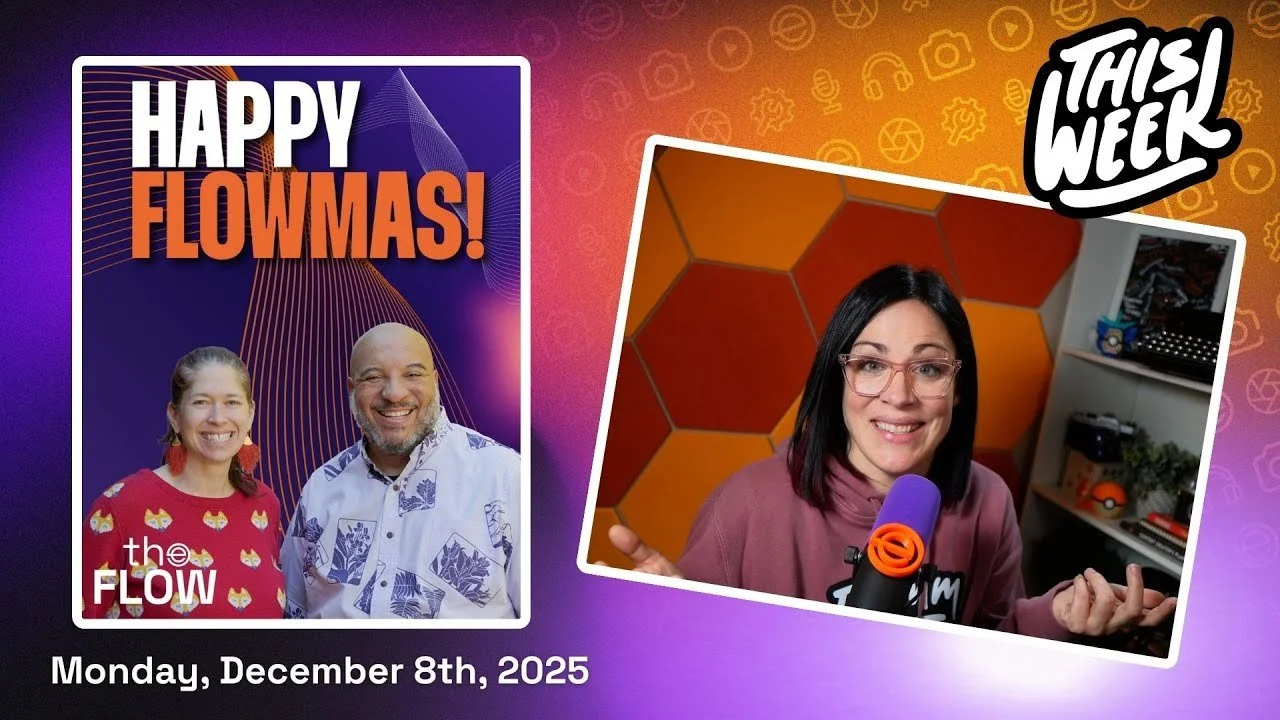
One of the strongest examples discussed was Flowmas, Ecamm’s 12-day email challenge.
Flowmas was designed to help creators go from no podcast to launch-ready. Each day included a small task that took five to fifteen minutes.
Participants earned points for completing daily assignments and engaging with the community.
The results were striking:
About 75 percent average open rate
Roughly 11 percent average click-through rate
Over 270 people completed the full challenge
Only nine unsubscribes
At one point, Gmail flagged YouTube short links as phishing, which temporarily hurt deliverability.
Ecamm caught it, fixed it, and communicated openly.
“We told people exactly what happened,” Caleb said. “Transparency mattered.”
Trust stayed intact. Engagement rebounded.
Case Study: Cat Mulvihill’s Course Feedback Loop
Another powerful example came from a course Ecamm ran with Cat Mulvihill.
At the bottom of each lesson email, subscribers saw simple reaction buttons. Thumbs up or thumbs down.
If someone clicked thumbs up, they were sent to Cat’s website to explore more of her work.
If they clicked thumbs down, they were redirected to a feedback form asking one simple question: what would you like to see instead?
“It’s not about punishing negative feedback,” Caleb explained. “It’s about collecting it somewhere useful.”
Ecamm reviewed the responses, filtered out noise, and shared constructive feedback with Cat in a way that was respectful and actionable.
This turned email feedback into a learning loop instead of a dead end.
Case Study: Idea Battles and Community Input
Ecamm also uses List Gadget’s Idea Battles to collect audience input.
Subscribers can submit ideas anonymously. Others can upvote or comment.
“What podcasting tips should we add to the course?”
“What topics do you want next?”
Each submission earns points. Engagement is rewarded. Feedback becomes collaborative.
Caleb summed it up simply. “Now I’m gamifying the response cycle.”
Why Gamification Works in Email
Gamification works because it rewards attention.
Social platforms train people to expect feedback. Likes. Progress. Validation.
Email rarely does.
By adding points, progress, and visible outcomes, email starts to feel alive again.
“It gives people those happy brain chemicals,” Caleb said. “You clicked a button, confetti went off, and you got points.”
That moment matters.
How to Start Without Overthinking It
You don’t need to rebuild everything.
Start small.
Add one interactive element.
Reward one meaningful action.
Be clear about what participation leads to.
Consistency matters more than complexity.
Final Takeaway
Email is still one of the most powerful owned channels available.
But ownership alone isn’t enough.
As Caleb put it, “We have to get out of the mindset that email is just a way to own an audience and sell to them.”
Attention has to be earned. Engagement has to be rewarded. And experiences matter more than messages.
Ecamm’s approach proves email can be fun, effective, and deeply human at the same time.

you might also like:
DISCLAIMER: This website contains affiliate links, which means that if you click on one of the product links, I receive a small commission. This assures that we can continue bringing you valuable content. Thank you for supporting Lights, Camera, Live! We only link to products we use or are highly recommended by trusted sources.

TikTok Live auctions are growing fast. Learn how they work, when to use them vs. live shopping, and how to get started, with insight from Katie Fay.